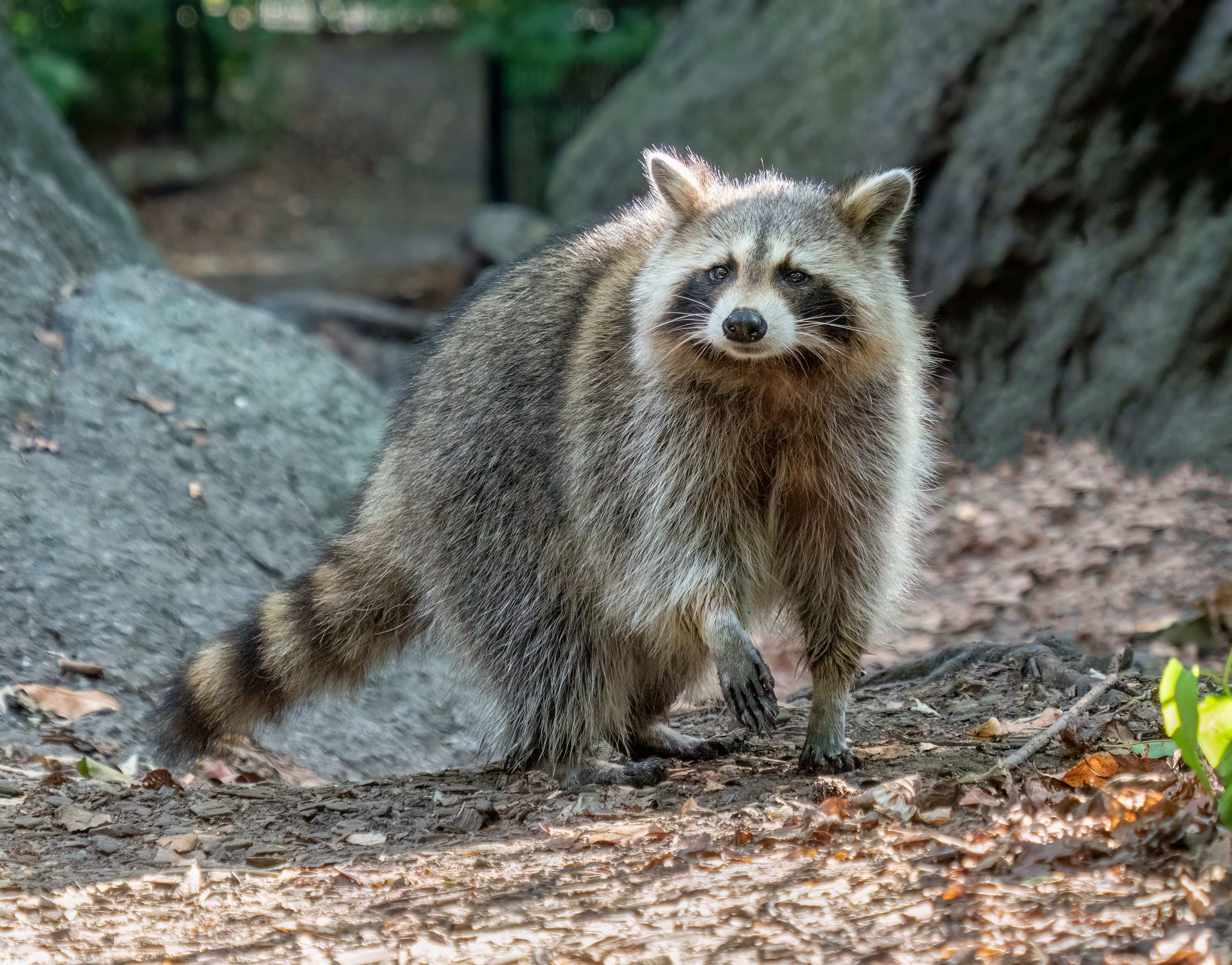
A raccoon found in a Westlake Village-area backyard tested positive for rabies, the Los Angeles County Department of Public Health announced Monday, Oct. 5. It marks the first time a raccoon has tested positive for rabies in the county since 1973.
Four people at a nearby worksite who may have been exposed to the animal are receiving post-exposure prophylaxis, a series of shots to prevent rabies infection, the department said in a press release. A dog that was current on its rabies vaccination may also have been exposed. The dog is under quarantine and doing well.
The raccoon appeared sick but was not aggressive toward people, according to the department.
Health officials said they have not yet determined which rabies variant infected the raccoon. Based on the county's rabies patterns, they believe the animal likely contracted the virus from a bat. Additional testing to identify the strain could take several weeks.
A record 70 rabid bats have been confirmed in Los Angeles County so far in 2026, breaking the previous record of 69 set in 2025. LA County Department of Public Health veterinarian Jennifer Sinatra told CBS News Los Angeles the trend is clear. "This year, we have seen 70 bats with rabies so far in Los Angeles County, which has already broken the record that we set last year of 69," Sinatra said.
The last case of rabies in a non-bat animal in the county was reported in 2014, when a skunk in Long Beach tested positive for a bat-associated strain. The 1973 raccoon case involved a skunk variant of rabies that has not been detected in the county since 1979.
Dr. Muntu Davis, Los Angeles County health officer, urged residents to avoid touching, handling or feeding wild animals, even those that appear healthy. Davis also stressed the importance of keeping pets current on rabies vaccinations.
Sinatra advised residents to keep wild animals away from their properties by not leaving food outdoors and keeping brush trimmed low.
Cats are required to be vaccinated against rabies in unincorporated LA County and in the cities of Calabasas, Hidden Hills, Westlake Village and Moorpark, according to the Thousand Oaks Acorn. The last locally acquired human rabies case in the county was in 1949.
Rabies is nearly always fatal once symptoms develop. The virus is most often transmitted through a bite or scratch, or when saliva from an infected animal enters an open wound or contacts the eyes, nose or mouth.
Residents who encounter a bat on the ground, one active during the day or wildlife behaving unusually should contact LA County animal control. Anyone bitten by a wild mammal should seek medical attention and report the incident to the Department of Public Health.