The Wallis Annenberg Wildlife Crossing is set to open Dec. 2 over Highway 101. Animals are showing up before construction ends.
Trail cameras near the south end of the crossing in Agoura Hills have captured bobcats, coyotes, mule deer and a female mountain lion with two large cubs. The sightings came in the three weeks before a Thursday, Oct. 8, public briefing at the site, National Park Service wildlife biologist Jeff Sikich said, as Spectrum News reported.
"I was super excited to see this adult female with two older kittens, roughly around a year old, walk the same deer trail we're on right now," Sikich said at the Thursday, Oct. 8, briefing. "Right in front of the crossing."
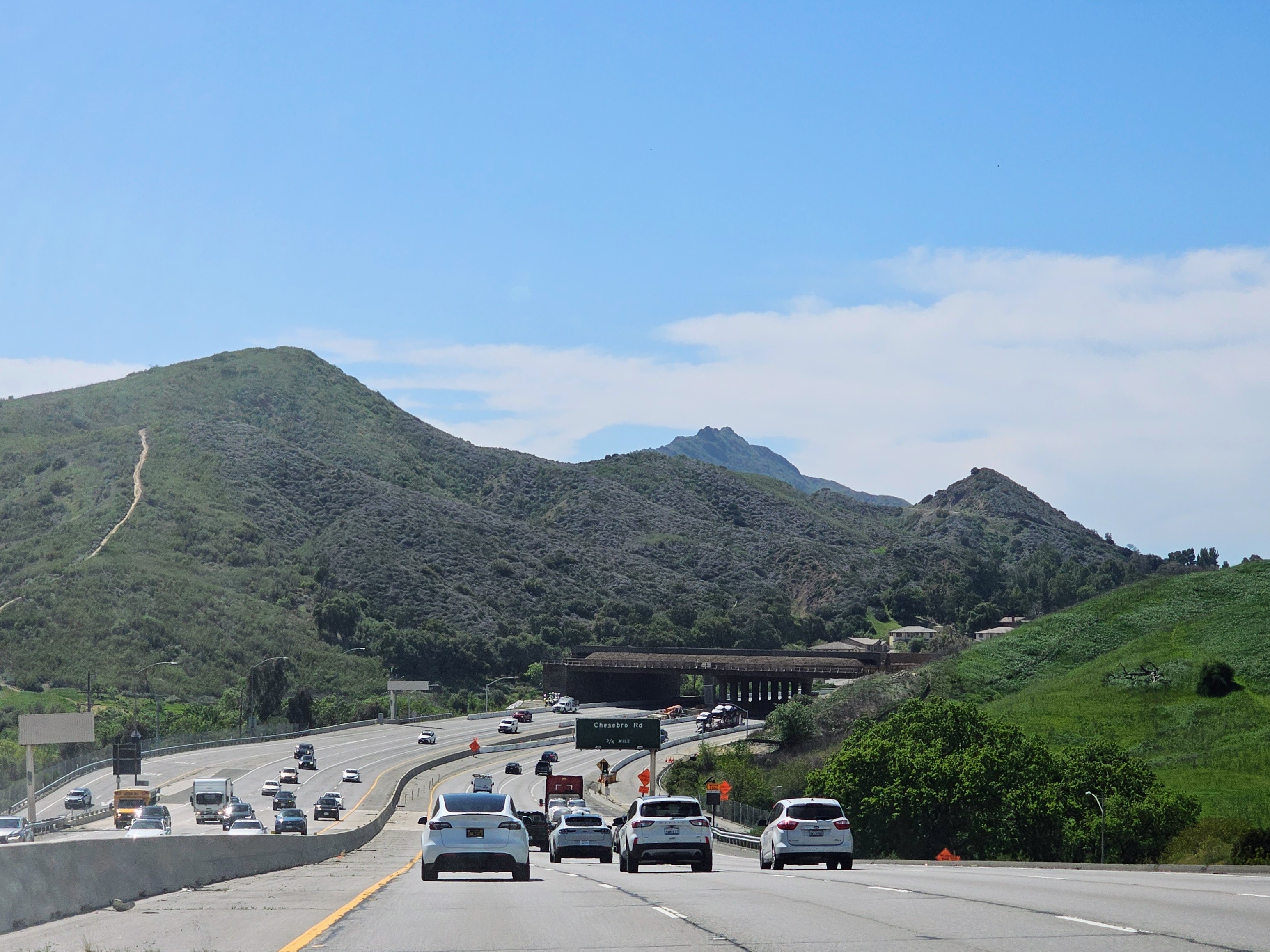
The $114 million bridge, billed as the world's largest wildlife crossing of its kind, spans 10 lanes of Highway 101 and adjacent Agoura Road. It measures roughly 210 feet long and 165 feet wide at its widest point, according to the Thousand Oaks Acorn. More than 300,000 motorists use that stretch of the 101 daily, KCLU reported.
The main bridge structure is complete and carries 6,000 native plants on its deck. Crews finished a second, smaller overpass over Agoura Road by early October, the Los Angeles Times reported. The remaining task: moving and compacting about 3 million cubic feet of soil to connect the two structures to hillsides on both sides of the freeway. As of early October, crews had moved more than 1 million cubic feet.
The soil is coming from the north side of the freeway, where it was deposited when the highway was widened decades ago. Funding came from state transportation dollars and more than $30 million in private donations from over 6,000 donors.
Why it matters for Conejo Valley wildlife
NPS wildlife branch chief Seth Riley said at the briefing that 41% of documented mountain lion matings in the Santa Monica Mountains have been between close relatives since 2002. Without genetic relief, modeling shows the population faces near-certain extinction within 50 years, according to the Los Angeles Times. The NPS found a young collared male mountain lion at the western end of the range with a kinked tail, a documented sign of inbreeding.
North of the crossing in the Simi Hills, the female mountain lion known as P-113 had three kittens: P-141, P-142 and P-143. Sikich said at the briefing that those kittens could be among the first mountain lions to use the crossing once they leave their mother.
After the crossing opens, scientists plan to use bio-logging collars to track heart rate, temperature and activity levels in animals that cross. Riley said the data will show whether animals are stressed by the structure or comfortable using it.
What could delay it
The primary risk is heavy El Niño rainfall. Clay-rich soil on the site becomes dangerously slick when wet, halting compaction work. The project was delayed from a late-2025 target by historic rains in the winter of 2022-23.
Beth Pratt, president and CEO of the Wildlife Crossing Fund, told KCLU in an Oct. 9 report that she is praying for dry weather through the opening.
A section of Agoura Road beneath the project remains closed from 7 a.m. to 5 p.m. on weekdays through Nov. 30 for bridge work and backfill operations.
Dec. 2 celebration
The ribbon-cutting ceremony is scheduled for Wednesday, Dec. 2, followed by a public celebration at King Gillette Ranch, 26800 Mulholland Highway in Calabasas, from 11:30 a.m. to 3:30 p.m. The ceremony will be live-streamed on screens at the ranch. Tickets are $10 for guests 13 and older, $5 for children 12 and under, according to the Conejo Valley Guide. Proceeds benefit the National Wildlife Federation's #SaveLACougars campaign.